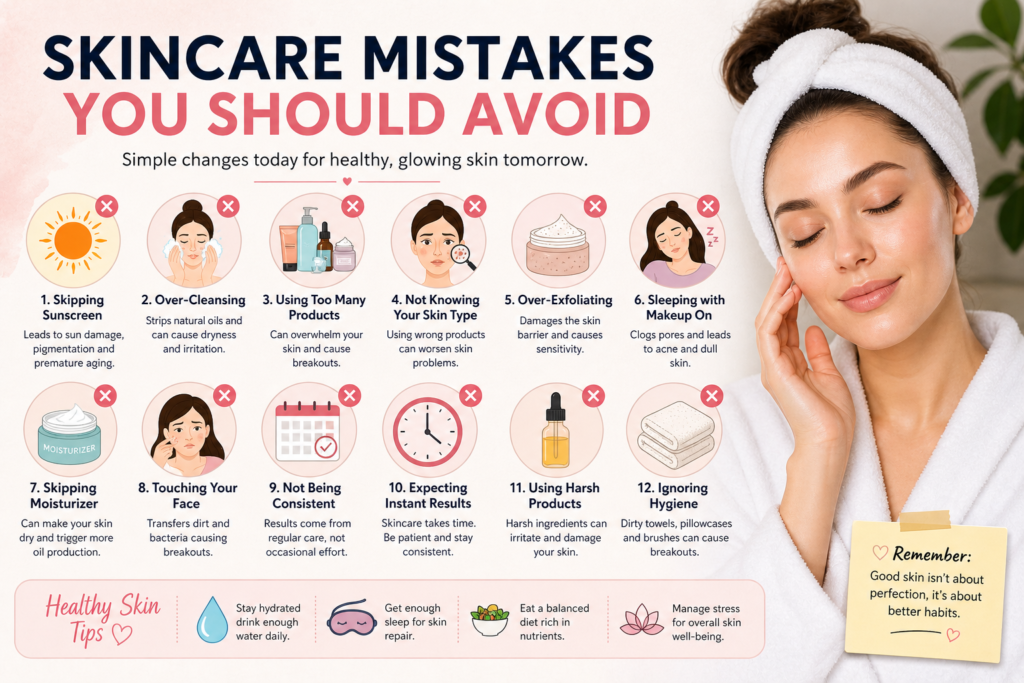
Taking care of your skin seems simple at first, but in reality, many people unknowingly follow habits that do more harm than good. With so much information online, trending products, and influencer advice, it’s easy to fall into routines that are ineffective or even damaging. The truth is, achieving healthy skin is not only about using the right products but also about avoiding the wrong practices. In fact, correcting your mistakes can often improve your skin faster than adding new products.
Your skin is a complex organ that acts as a protective barrier against environmental damage, bacteria, and moisture loss. When this barrier is disrupted due to poor skincare habits, it can lead to a wide range of issues including acne, dryness, irritation, sensitivity, and premature aging. Understanding what not to do is just as important as knowing what to do. This guide explores the most common skincare mistakes in detail and explains how to fix them in a practical, sustainable way.
One of the biggest mistakes people make is skipping sunscreen. Many assume sunscreen is only necessary when going outside or during sunny weather, but this belief is far from accurate. Ultraviolet rays can penetrate through clouds and even windows, meaning your skin is exposed to damage even indoors. Over time, this exposure leads to pigmentation, uneven skin tone, fine lines, and long-term skin damage. Skipping sunscreen essentially cancels out the benefits of every other skincare product you use. The solution is simple but powerful: apply a broad-spectrum sunscreen with at least SPF 30 every morning as the final step in your routine. Consistency in sunscreen use is one of the most effective ways to maintain youthful and healthy skin.
Another common mistake is over-cleansing the skin. While cleansing is essential, doing it too frequently or using harsh cleansers can strip away natural oils that your skin needs to stay balanced. When your skin loses these oils, it may react by producing even more oil, leading to breakouts and irritation. Many people mistake this for oily skin and end up washing their face even more, creating a cycle that worsens the problem. A balanced approach is to cleanse your face twice a day using a gentle cleanser that does not disrupt your skin barrier.
Using too many skincare products at once is another widespread issue, especially among beginners. With so many options available, it can be tempting to try everything at once, from serums and acids to masks and treatments. However, layering multiple active ingredients without understanding how they interact can overwhelm your skin. This often results in irritation, redness, and breakouts. A more effective strategy is to keep your routine simple and introduce new products gradually. This allows you to observe how your skin reacts and identify what actually works for you.
Not understanding your skin type is another fundamental mistake that affects your entire routine. Your skin type determines the kind of products that will work best for you. Using products meant for dry skin on oily skin can clog pores, while using oil-control products on dry skin can cause further dehydration. Many people assume their skin type without proper observation, leading to poor product choices. Taking time to identify whether your skin is oily, dry, combination, sensitive, or normal can significantly improve your skincare results.
Over-exfoliation is another damaging habit that many people overlook. Exfoliating helps remove dead skin cells and improves texture, but doing it too often can weaken your skin barrier. When the barrier is compromised, your skin becomes more sensitive, prone to irritation, and vulnerable to external damage. Some people use physical scrubs daily, while others combine multiple chemical exfoliants without realizing the impact. A balanced approach is to exfoliate only two to three times per week using gentle products suited to your skin type.
Sleeping with makeup on is a mistake that can quickly lead to skin problems. After a long day, it may feel harmless to skip cleansing, but leaving makeup on overnight clogs pores and prevents your skin from repairing itself. This often results in breakouts, dullness, and irritation. Your nighttime routine is when your skin undergoes repair and regeneration, so starting with clean skin is essential. No matter how tired you are, removing makeup and cleansing your face should never be skipped.
Another common misconception is that oily skin does not need moisturizer. Many people avoid moisturizing because they fear it will make their skin even oilier. In reality, skipping moisturizer can cause your skin to produce more oil to compensate for the lack of hydration. This leads to an imbalance that worsens oily skin conditions. The key is to use a lightweight, non-comedogenic moisturizer that hydrates without clogging pores.
Touching your face frequently is a subtle but harmful habit. Your hands come into contact with countless surfaces throughout the day, collecting bacteria and dirt. When you touch your face, these impurities transfer directly to your skin, increasing the risk of breakouts and irritation. Being mindful of this habit and keeping your hands clean can make a noticeable difference in your skin’s condition.
Inconsistency is another major reason why many people fail to see results from their skincare routine. Skincare is not about occasional effort; it requires daily consistency. Switching products too often or skipping steps can prevent your skin from adapting and improving. Most skincare products take several weeks to show visible results, so patience is essential. Sticking to a routine and giving your skin time to respond is key to long-term success.
Expecting instant results is closely related to inconsistency. In a world of quick fixes, many people expect skincare to work overnight. When they don’t see immediate changes, they abandon products prematurely. This approach leads to frustration and prevents meaningful progress. Understanding that skincare is a gradual process helps set realistic expectations and encourages consistency.
Using harsh or unsuitable products is another mistake that can damage your skin. Strong ingredients like high-concentration acids or retinol can be beneficial when used correctly, but improper use can lead to irritation and sensitivity. Beginners often start with powerful products without building tolerance, which can disrupt the skin barrier. A safer approach is to start with gentle formulations and gradually introduce stronger ingredients if needed.
Ignoring patch testing is a simple but risky mistake. Applying a new product directly to your face without testing can lead to allergic reactions or irritation. Patch testing allows you to see how your skin reacts before fully incorporating a product into your routine. This small step can prevent significant discomfort and damage.
Using dirty towels or pillowcases is another overlooked factor that affects skin health. Fabrics that come into contact with your face can harbor bacteria, oil, and dirt. When not cleaned regularly, they can contribute to breakouts and skin irritation. Changing pillowcases frequently and using clean towels can help maintain better hygiene and healthier skin.
Hydration plays a crucial role in skin health, yet many people neglect it. Not drinking enough water can leave your skin looking dull and dehydrated. While skincare products help externally, internal hydration is equally important for maintaining elasticity and overall skin function.
Following skincare trends without understanding your skin’s needs is another mistake driven by social media influence. Not every popular product or routine will suit your skin. Blindly following trends can lead to irritation or ineffective results. A more thoughtful approach is to choose products based on your specific concerns and skin type rather than popularity.
Building a better skincare routine starts with simplicity and awareness. A basic routine should include cleansing, moisturizing, and sun protection in the morning, followed by cleansing, treatment if needed, and moisturizing at night. This structure provides a strong foundation for healthy skin without overwhelming it. Additional steps can be added gradually based on your needs.
Lifestyle habits also play a significant role in skin health. Poor sleep, stress, and an unhealthy diet can all affect your skin’s appearance. Getting enough rest, managing stress, and maintaining a balanced diet support your skincare routine and improve overall results. Skincare is not just about products; it is a combination of external care and internal well-being.
In conclusion, avoiding common skincare mistakes is one of the most effective ways to improve your skin. By understanding these errors and making simple adjustments, you can protect your skin barrier, prevent future problems, and achieve a healthier, more radiant complexion. Skincare does not need to be complicated or expensive. With the right habits, consistency, and a thoughtful approach, you can build a routine that truly works for you over time.
Quick Summary
Avoiding skincare mistakes such as skipping sunscreen, over-cleansing, using too many products, over-exfoliating, and being inconsistent can significantly improve your skin. Focus on a simple routine, understand your skin type, and stay patient for long-term results.
Really helpful breakdown of common skincare mistakes. I like how it focuses on simplifying routines and being consistent instead of chasing trends. The reminder about sunscreen and over-exfoliation is especially important, small habits really do make a big difference over time.
Thanks for your lovely comment on our blog. We’re very glab that you like it. Keep with us.