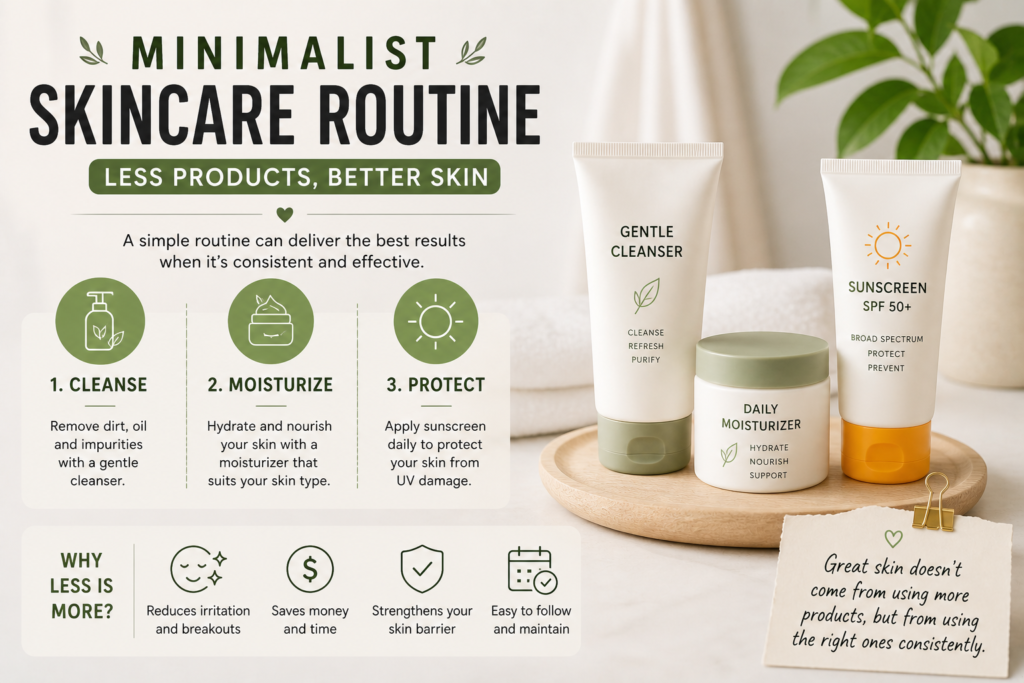
In a world filled with endless skincare products, complicated routines, and constant trends, the idea of doing less may seem unusual. However, a minimalist skincare routine is becoming increasingly popular for a simple reason—it works. Instead of overwhelming your skin with multiple products, a minimalist approach focuses on using only essential steps and carefully chosen products that truly benefit your skin. The result is often healthier, more balanced, and naturally glowing skin.
A minimalist skincare routine is built on the principle that your skin does not need dozens of products to function properly. In fact, overloading your skin with too many ingredients can lead to irritation, breakouts, and confusion about what is actually working. By simplifying your routine, you reduce the risk of damaging your skin barrier and allow your skin to maintain its natural balance more effectively.
The foundation of a minimalist routine begins with understanding your skin’s basic needs. Every skin type, whether oily, dry, combination, or sensitive, requires three essential steps: cleansing, moisturizing, and protection. These core steps form the backbone of a routine that supports long-term skin health without unnecessary complexity.
Cleansing is the first and most important step in any skincare routine. It removes dirt, oil, and impurities that accumulate throughout the day and night. In a minimalist routine, the focus is on using a gentle cleanser that cleans effectively without stripping the skin’s natural oils. Over-cleansing or using harsh products can disrupt the skin barrier, which is why a simple, balanced cleanser is ideal.
Moisturizing is equally essential and should never be skipped, even if your skin is oily. A good moisturizer helps maintain hydration, supports the skin barrier, and keeps your skin smooth and comfortable. In a minimalist approach, choosing one effective moisturizer that suits your skin type is far better than layering multiple hydrating products.
Sun protection is the final and most critical step in a minimalist skincare routine. Daily exposure to ultraviolet rays can cause premature aging, dark spots, and long-term damage. Using a broad-spectrum sunscreen every morning protects your skin and preserves the results of your routine. Without sunscreen, even the best skincare efforts can be undone over time.
One of the key advantages of a minimalist routine is that it reduces the chances of irritation. Many skincare issues arise from mixing too many active ingredients or frequently changing products. By limiting your routine to a few carefully selected products, you give your skin the stability it needs to repair and function properly. This is especially beneficial for sensitive or acne-prone skin.
Another important benefit is cost-effectiveness. A minimalist skincare routine helps you save money by focusing only on what you truly need. Instead of spending on multiple products that may not deliver results, you invest in a few reliable items that work consistently. This approach not only simplifies your routine but also makes skincare more sustainable in the long run.
Consistency is a major factor in the success of a minimalist routine. When you use fewer products, it becomes easier to follow your routine daily without feeling overwhelmed. Regular use of simple, effective products allows your skin to gradually improve over time. Unlike complicated routines that are difficult to maintain, a minimalist approach encourages long-term consistency.
A common misconception is that fewer products mean fewer results. In reality, the opposite is often true. When your skin is not overloaded with ingredients, it can respond better to the products you use. This leads to improved texture, reduced breakouts, and a healthier overall appearance. Minimalism is not about doing less care—it is about doing the right care.
It is also important to avoid unnecessary steps that do not add value to your routine. For example, using multiple serums, frequent exfoliation, or constantly switching products can disrupt your skin’s balance. In a minimalist routine, additional products should only be introduced when there is a clear need, such as treating acne or addressing specific concerns.
Lifestyle habits play a supportive role in achieving the best results from a minimalist skincare routine. Drinking enough water, maintaining a balanced diet, getting proper sleep, and managing stress all contribute to healthier skin. These habits work alongside your simplified routine to enhance its effectiveness.
Building a minimalist skincare routine does not mean ignoring your skin’s needs. Instead, it requires paying closer attention to how your skin reacts and adjusting your routine accordingly. If your skin feels comfortable, hydrated, and balanced, it is a sign that your routine is working. If not, small adjustments can be made without adding unnecessary complexity.
Another advantage of minimalism is that it makes it easier to identify what works and what does not. When you use fewer products, you can clearly see how each one affects your skin. This helps you make better decisions and avoid wasting time and money on ineffective products.
In conclusion, a minimalist skincare routine is a practical and effective approach to achieving healthier skin. By focusing on essential steps—cleansing, moisturizing, and sun protection—you create a strong foundation for long-term skin health. Reducing the number of products not only simplifies your routine but also minimizes the risk of irritation and improves consistency. With patience, smart choices, and a focus on quality over quantity, you can achieve clear, balanced, and naturally glowing skin without unnecessary complexity.
Quick Summary
A minimalist skincare routine focuses on using fewer, essential products such as a cleanser, moisturizer, and sunscreen. This approach reduces irritation, saves money, improves consistency, and helps your skin maintain a natural, healthy balance over time.
1